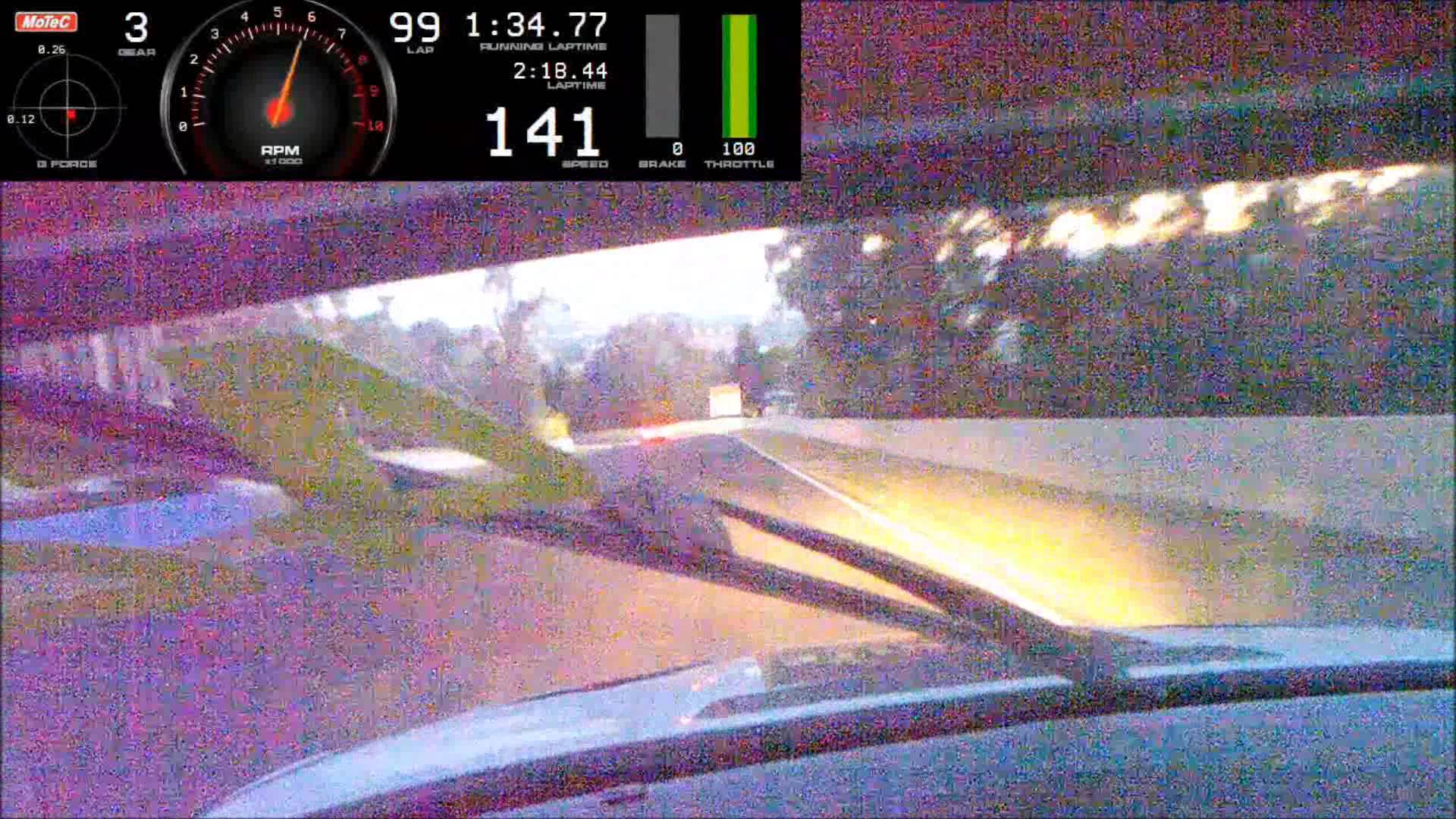
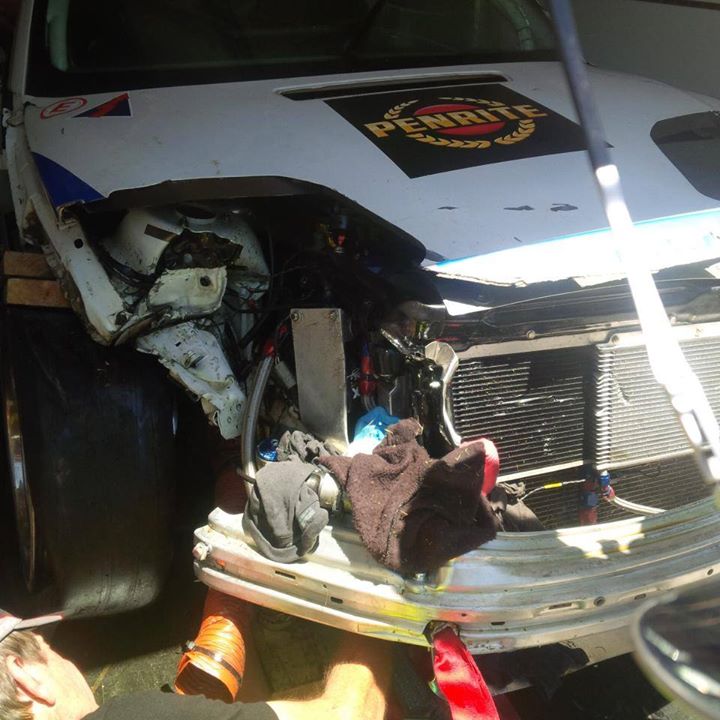
The Bathurst 12 hours race is in the books, but it wasn’t without a kangaroo losing his life.
We had to rewatch this a few times before we could actually see the kangaroo before he hit the windshield. Gives you an idea of how fast he was going and how little time he had to react.
When traveling at 200+ mph – while racing a Porsche 997 Turbo – the owner of this Nissan GT-R probably didn’t expect what was about to happen at the end of this high speed pull.
At the end of the pull, the GT-R hits the brakes and not more than a second later a Ford GT comes flying by as if the Nissan is sitting still. We’re not sure exactly how fast the GT was going, but it must’ve been well over 200mph.
Check out the video below as the roar of the Ford’s exhaust has our ear drums singing with joy. This flyby is almost too epic to believe!
Check out this Chevy Malibu squaring off against a Fox body. Malibu loses control, turns left into steel barrier and flips over.
Many are blaming the Malibu driver for not ‘lifting’ – well, letting off the gas is partly what causes that to begin with.
Most people think they should let off the throttle or break when they start to slide. This unloads the rear tires and makes the slide worse. Slowly ease out of the throttle to regain traction, without transferring weight off the rear and steer in the direction of the slide.
Now from what we could see, it looks like it was almost an over correction. He was heading directly for the other car and corrected too hard to avoid it.
Either way, pretty nasty wreck. Hope the guy was alright! And by the way, we’re surprised the Fox even had any nitrous left by the time he staged!
Current-generation Formula 1 cars have been criticized by many as being too easy to drive. These critics have pointed examples of young and inexperienced drivers such as Max Verstappen.
The problem is that, requiring less skill and experience, makes more talented drivers less likely to stand out and, thus, hurt the sport itself. One way to change this is to increase the engine’s output considerably – which, in effect – would separate the amateur drivers from the professionals.
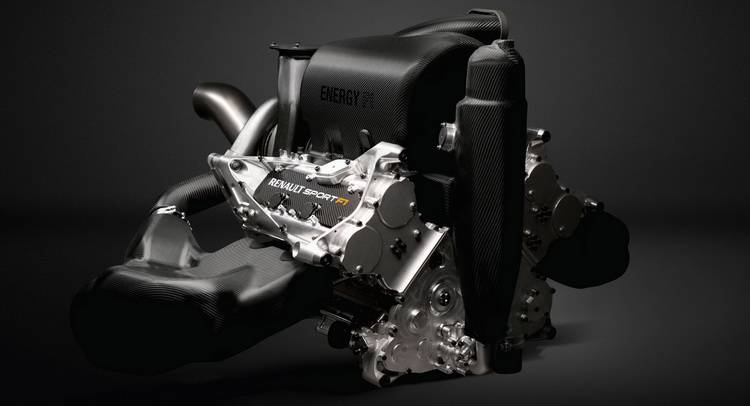
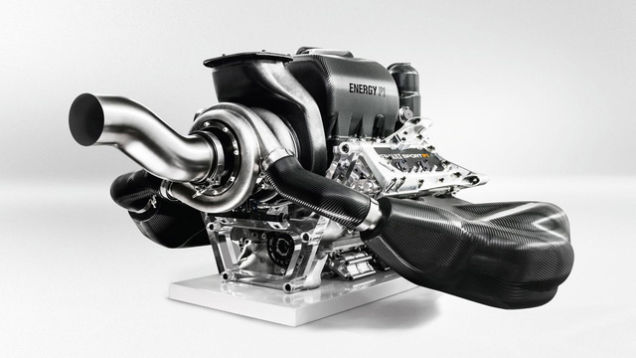
Last month, the F1 engine chiefs all met in Geneva to discuss cranking up the horsepower from the current 750hp to 1000hp – or even more. Furthermore, the FIA did not rule out the Power Unit Working Group’s suggestion, even though such a dramatic change is unlikely to happen before 2017.
Some technical directors believe that the 1000-horsepower target can be achieved without a costly total redesign of today’s turbocharged V6 engines. A higher-revving limit, an increase to the regulated fuel flow rate, and little design tweaks such as upping the fuel tank capacity beyond 100Kg would, most likely, do the job to reach those numbers.
Legendary three-time F1 world champion – and current Mercedes exec Niki Lauda, has experienced the era of the high-power turbocharged engines, and he is in favor of this new idea.
“It should have been 1200bhp, plus wider tires and aerodynamic characteristics, which deliver a steep power curve that becomes very critical at the limit”, he said. “Currently, F1 cars allow every other GP2 and F3 driver to be as quick as established drivers within a very short time and without taking much risk.”
The FIA has already introduced stricter rules for new drivers obtaining an F1 super license, and is working with the teams to decide if an increase in downforce, bigger wheels and more aggressive designs should be implemented.
Word is one of these GT500 ‘prototypes’ might have gone as fast as 10.98 @ 126 MPH
From earlier:
Ford Performance is hard at work on the new GT500, according to fresh reports from the Detroit Auto Show. The powerplant is unknown at this time, but we are hearing that this engine could be “well over the 700HP mark”, all while “breathing through a straw”. Take it for what it’s worth, but we perceive that as a hint towards Forced Induction (low boost from the factory?). Could we see Ford’s first production 5.0 EcoBoost make it’s debut in the GT500? After all, that’s what the people want. And it’s no secret that Ford has been testing a 5.0 Twin Turbo development mule as recently as a few months ago:
Regardless, we expect this new beast to depart from the now highly-discussed Flat Plane Crank. Traditionally, the GT350 (and GT350R) has always been aimed towards track use, while the GT500 is more of an earth-rotating, straight line, freeway runner.
As far as power delivery, as you all know, the Hellcat is producing just north of 700HP, so we would be shocked if Ford doesn’t take it one step further.
If this new behemoth will be a forced induction car, than we can safely assume that Ford will stick with the traditional lobe crankshaft, or at least depart from the 5.2L GT350 platform. The new GT350 if a high compression car, so running boost through it would require quite significant changes.
Another topic worthy of discussion is weight savings. We all know Ford has recently invested heavily in Aluminum materials and tooling, primarily for the new F-150 line – but Ford Performance has also added a heavy dose of weight savings to the new GT350 and GT350R in terms of carbon forged plastic, carbon fiber wheels and aluminum fenders. Could we see a new GT500 with more extreme use of aluminum and carbon fiber? Could we see this car come in at 700+HP and weigh less than 3,600 lbs from the factory?
When can we expect some hard info on this new Ford Performance Halo car? Time will tell, but our sources seem to believe that this car will be released 2017 model year, so we expect a preview in the Summer of 2015, if not sooner. It’s also interesting to note that Ford has already claimed that there will be “12 New, High Performance Vehicles announced”. You can mark the SVT Raptor, Focus RS, GT350 and GT350R off that list – so Ford still has a few more tricks up their sleeve. Stay tuned for more 2017 GT500 news.
The 2015 Corvette Z06 has been catching a lot of flack lately.
We personally think it’s a little unfair given the car’s potential and overall capabilities. Should it be a little faster stock? In our opinion, yes.
But overall the car still is a supercar on so many levels, and in every performance category.
We also hear many people wanna write this car off as a quarter miler, saying it’s not meant for that.
Well, this is America, and we drag race. Corvettes are very good drag cars in our experience, so with that being said here’s the fastest C7Z06 we’ve seen to date.
The mods are very minimal and car is on stock boost. Sucks it had to be modded at all, but this thing is moving for what it has done to it. That factory tune must really be conservative.
Here is the mod list:
Fasterproms custom tune by Jeremy Formato
Modified air box, and air duct with modified AFE CAI
Fasterproms Thermal reduction plates That reduce blower heat soak
Fasterproms Flex fuel kit- This is a flex fuel sensor that we make to allow us to run on blended e85/pump gas
Fasterproms 1.5Gal Expansion tank tank for greater supercharge coolant capacity
Just a month before it’s official reveal at the Geneva Motor Show 2015 next month, the all-new Audi R8 has been caught undisguised. Instagram user @dreboog posted this photo of the next-gen Audi supercar, resting on a car lift system.
Apart from the revised body styling, the new Audi R8 will be offered with improved versions of the current V8 and V10 motors, which will also see a power increase of at least 25-30 hp. The new R8 will also feature the same V10 found in the Lamborghini Huracan LP610-4.
Both these engines will be mated to a dual-clutch transmission. Along with the power upgrades, the new R8 will weigh ‘significantly’ less, thanks to a newly developed hybrid carbon fiber chassis.
It’s no secret that Ford has full intentions to race at LeMans this year with the new Ford GT, and today we get our first look at how that car will look in full race trim. Full credit to rc82 for the renders
This EcoBoost-powered V6 stunner will be competing at Le Mans this year – 50 years after the original GT40 MkII made history and outperformed Ferrari in the famous 24 hour endurance race in France, and the timing is no coincidence.
The new Ford GT is built to conform to the Automobile Club de l’Ouest’s (ACO) GTE regulations. This is the same class where the factory Porsche, Ferrari, Corvette Racing and Aston Martin teams compete in the annual 24 Hours of Le Mans race.
We also know that one of the pilots of this Ford GT will be none other than Scott Pruett – the most successful driver in North American road racing history. His connection to Ford dates back to the 80’s when he joined the manufacturer as a developmental driver. A secondary driver, Joey Hand, has been a factory BMW driver for eight years.
These two American drivers are ready to lead the development of the Ford GT as the team gets ready to represent Ford on the international stage.
We have also learned that Ford was supposed to announce the return to Le Mans at the same time they announced the Ford GT at the NAIAS, but Ford has opted to time the announcement right before the race at Le Mans in June.
The new Ford GT’s is powered by the same 3.5-liter TTV6 EcoBoost Daytona Prototype engine, and it only makes sense for Ford to run with this engine. And due to the reliability it has displayed at major endurance events such as the 24 Hours of Daytona, the Ford GT road car will hit the ground running with a thoroughbred engine package.
Furthermore, the Le Mans / TUDOR series is arguably the best automotive road-racing series going these days. We hope that this addition brings the series more viewers and fans. Where else do you get to see such a diversity of bleeding-edge technology along with the world’s best production-based race cars?
This is an exciting time for Ford, and they are getting ready to display our racing heritage on the international stage. We will keep you updated as this race program develops and prepares for the June race. Check out the videos below: