Home Blog Page 28

Ford reveals the 540-HP Shelby GT350R Mustang

0

shelbygt350r-06-hr-1

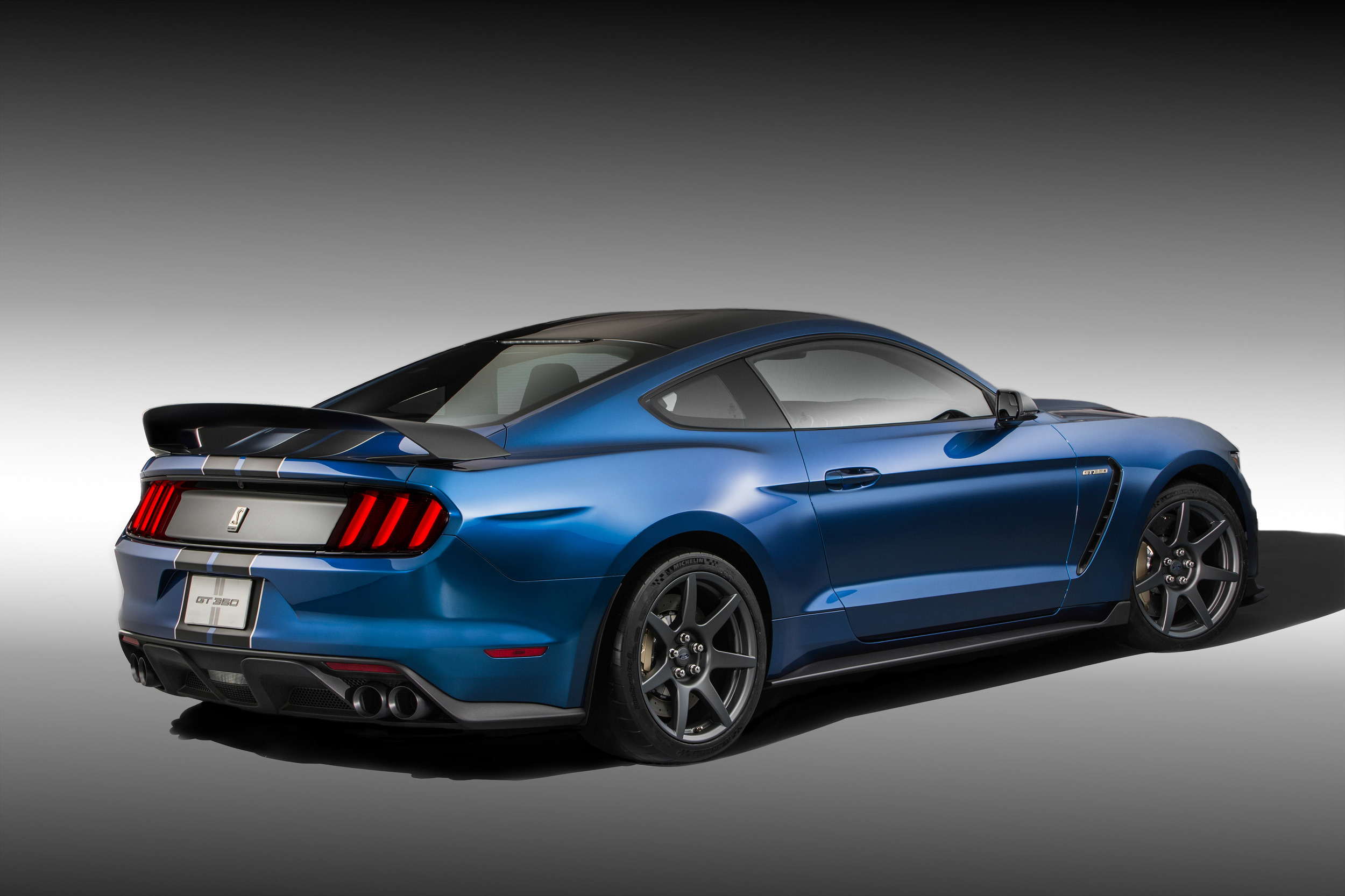
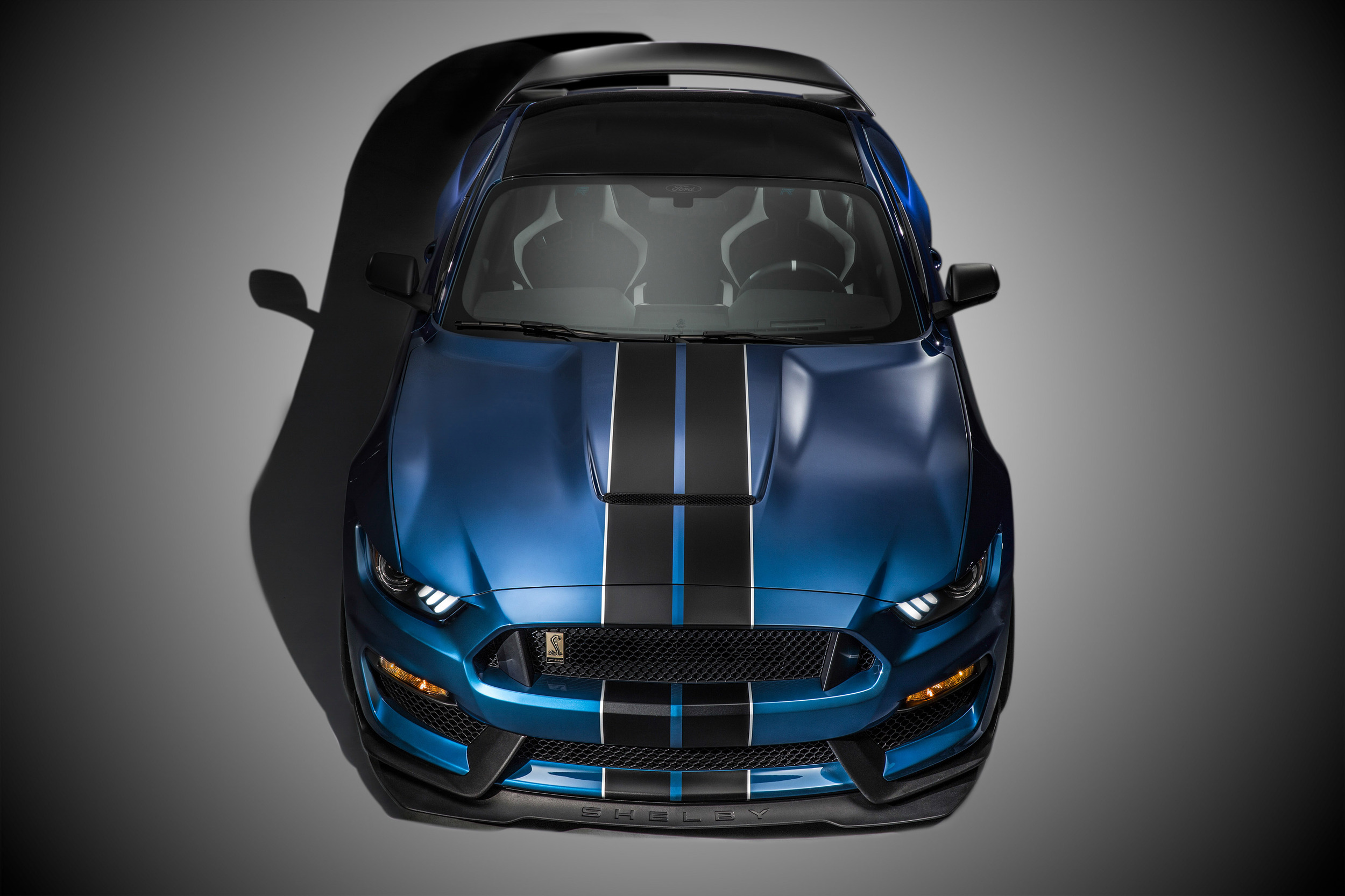
Ford has finally revealed the highly-anticipated, track-bred Shelby GT350R today, and this new Mustang means business. The Camaro Z/28 has officially been put on notice, because Ford claims this is the fastest track Mustang ever developed.

Here is what we know at this point: that amazing flat plane crank V8 will have 540 horsepower and 400+ pound-feet of torque; Ford’s first ever magnetic ride suspension. The GT350R will be 130 pounds lighter than the GT350; Carbon Ceramic Brakes, and no air conditioning or a rear seat. And get this, the wheels are made of carbon fiber.

Another important point is that the GT350R will not be limited to just the track. While that’s certainly its natural habitat, owners will be able to register and drive this monster on public roads.

For those who are more comfort-minded, Ford is offering an optional Electronics Package in the GT350R. Included in this package is dual-zone air conditioning, 8-inch touch screen with navigation, seven-speaker audio system, turn signal mirrors and more.
shelbygt350r-10-hr-1

shelbygt350r-09-hr-1

shelbygt350r-08-hr-1

shelbygt350r-04-hr-1

shelbygt350r-06-hr-1

shelbygt350r-02-hr-1

Press Release:

SHELBY GT350R MUSTANG: MOST TRACK-CAPABLE PRODUCTION MUSTANG EVER BUILT COMING TO U.S., CANADA LATER THIS YEAR

A combination of changes to aerodynamics and suspension tuning to the new Shelby® GT350R Mustang leads to most race-ready road-legal Mustang ever
Significant engineering innovations result in weight savings, aero improvements to benefit on-track performance; Ford is the first major automaker to introduce carbon fiber wheels as standard equipment on Shelby GT350R Mustang
New Shelby GT350R, a limited-production performance Mustang, will be available later this year
Ford today unveiled the new Shelby® GT350R Mustang, the most track-ready road-going production Mustang ever built.

In 1965, Ford and Carroll Shelby developed a road-racing version of the popular Ford Mustang – the Shelby GT350 Competition model. Lighter, more powerful and with a highly developed suspension, it is one of the most iconic racing Mustangs ever produced.

Arriving later this year, the new Shelby GT350R has been designed and engineered in the same spirit, delivering never-before-seen track capability from a Mustang – thanks to innovations in aerodynamics, chassis engineering and light-weighting.

“The Shelby GT350R Mustang is a no-compromise car in the pursuit of maximum track capability,” said Raj Nair, Ford group vice president, Global Product Development. “It is a thoroughbred street car making use of technology and ingenuity to deliver performance few enthusiasts have ever experienced.”

The car features the first-ever production V8 from Ford with a flat-plane crankshaft – the most powerful naturally aspirated engine Ford has ever produced – plus a specially tuned suspension. It is fitted with revised spring rates and antiroll bars, lower ride height, unique track-tuned alignment settings, revised bushings and jounce bumpers, cross-axis ball joints in the front suspension, and revised calibration controlling the MagneRide dampers.

“The Shelby GT350R Mustang is a car with the nimbleness and power delivery you want on a road course,” said Nair. “This isn’t just about horsepower. The Shelby GT350R is an all-around balanced athlete – one that is extraordinarily precise and agile.”

Track technology for the street
Lightweight carbon fiber wheels are standard on Shelby GT350R, making Ford the first major automaker to introduce this innovative wheel technology as standard equipment.

Carbon fiber wheels have been offered on only a handful of exotic supercars and will benefit Shelby GT350R performance by shaving critical unsprung weight and reducing rolling inertia. The 19×11-inch front and 19×11.5-inch rear wheels provide approximately 13 pounds of unsprung weight reduction per wheel and offer higher levels of stiffness than equivalent aluminum wheels.

The lightweight wheels will be shod in Michelin’s top-shelf Pilot Sport Cup 2 high-performance tires with rubber compound and a construction unique to Shelby GT350R. This combination of incredibly stiff and light wheels with bespoke tires offers customers exceptional steering feel and levels of performance.

Weight reduction in pursuit of performance
Ford engineers delivered against aggressive targets for weight reduction on the Shelby GT350R. If a part did not make the car faster around a road course, it was considered for deletion.

Items removed include air conditioning, the stereo system, rear seats, trunk floorboard and carpet, backup camera and emergency tire sealer and inflator. Exhaust resonators also have been removed for weight savings with the benefit of creating a sharper exhaust tone.

Shelby GT350R is more than 130 pounds lighter than the Shelby GT350 Track Pack model, which has proven its durability in multiple 24-hour racetrack tests.

For customers seeking more comfort in their Shelby GT350R, Ford is offering an optional Electronics Package. Included is dual-zone air conditioning, 8-inch touch screen with navigation, seven-speaker audio system, turn signal mirrors and more.
Aggressive aerodynamics
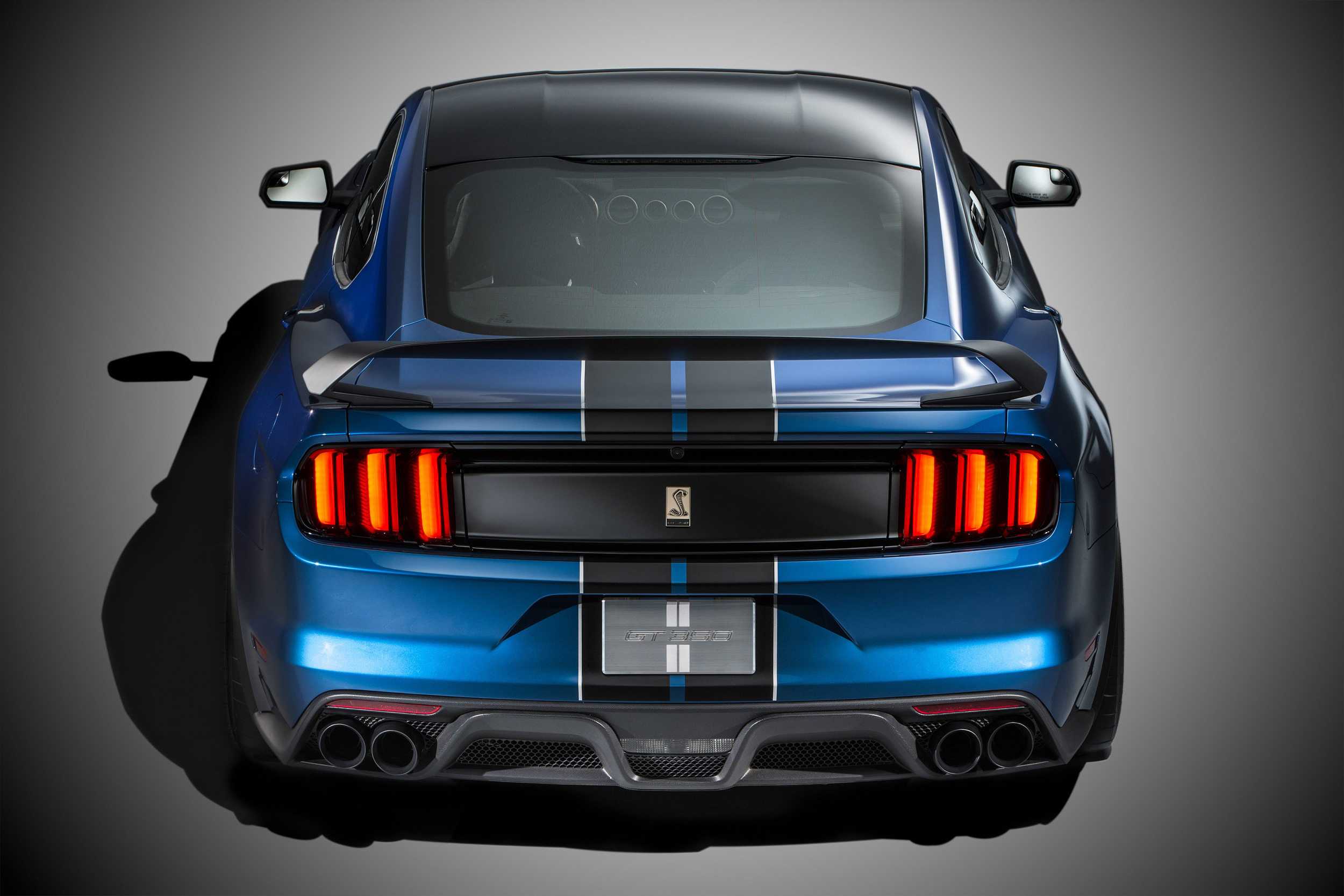
Shelby GT350R has been optimized for aerodynamic excellence. Details including the hood vent for heat extraction and lift reduction, underbody belly pans front and rear, an aggressive diffuser, vented wheel wells and turbulence-reducing fender vents, wheel air curtains and side skirts all remain on Shelby GT350R, but the car’s downforce capability has been increased.

Revisions to the front splitter maximize downforce, while an all-new high-efficiency carbon fiber rear wing has been added in anticipation of competition. The wing moves the vehicle’s center of pressure rearward while improving downforce and lift balance – ideal for high-speed track work.

“Shelby GT350R’s highly efficient aerodynamics, innovative light-weighting and world-class chassis deliver a truly spectacular driving experience that makes you feel like a professional racing driver,” said Kerry Baldori, Ford Performance chief functional engineer.

World-class powertrain
The new 5.2-liter dual-overhead-cam V8 engine is the first-ever production V8 from Ford with a flat-plane crankshaft – an architecture typically found only in racing applications or exotic European sports cars.

Unlike traditional V8s, where the connecting rods are attached to the crankshaft at 90-degree intervals, this design evenly spaces all crank pins at 180-degree intervals to optimize high-speed engine breathing. It is the most powerful naturally aspirated production Ford engine ever, with more than 500 horsepower and more than 400 lb.-ft. of torque.

An air-to-oil engine oil cooler typically found only on race cars maintains engine temperatures under the most severe conditions, as does a standard cooler for the six-speed manual transmission.

A Ford-tuned limited-slip Torsen differential with 3.73 axle ratio is optimized for cornering grip and straight-line traction, while an electronically modulated rear-mounted air-to-oil differential cooler maintains ideal temperatures during track driving.

Dedicated R design details
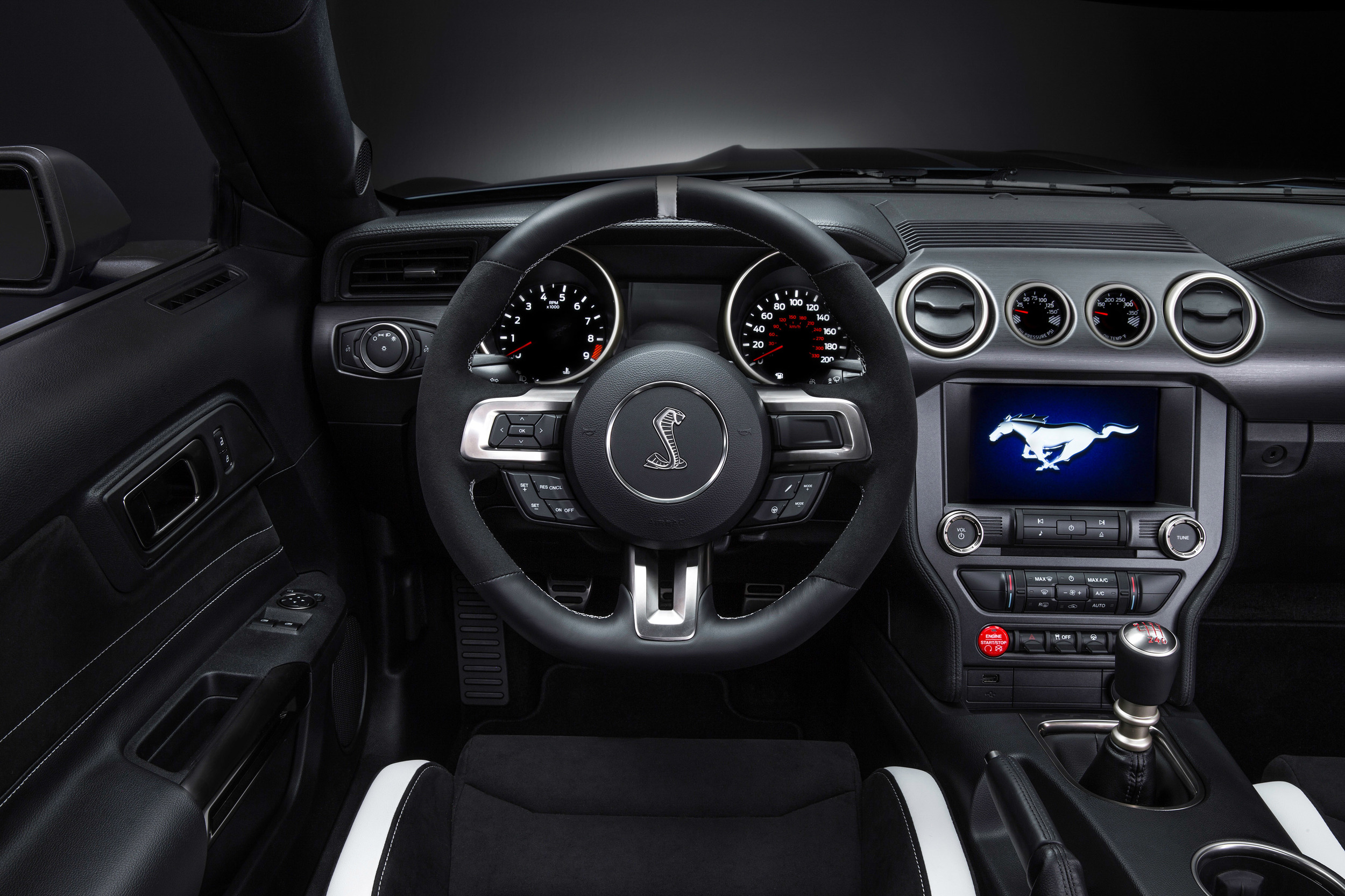
Aside from carbon fiber wheels, larger front splitter and rear wing, Shelby GT350R features distinct design details. Exterior touches include red painted brake calipers, red pin striping at the edges of the optional over-the-top racing stripes and Shelby GT350R badging. Inside is high-contrast red stitching, Shelby GT350R badging and the D-shaped steering wheel fitted with a red center mark at the top.

New breed of performance
The limited-production Shelby GT350R will be available in the United States and Canada later this year, and is one of more than 12 new Ford Performance vehicles coming by 2020.

“This is the pinnacle of performance Mustangs today,” said Dave Pericak, director, Ford Performance. “The Shelby GT350R Mustang lays the groundwork for a story that will play out for years to come on the track and the street.”

Ford Reveals the new Ford GT at Detroit Auto Show

0
Scroll down for more images
Scroll down page for more images, video and official Ford Press Release

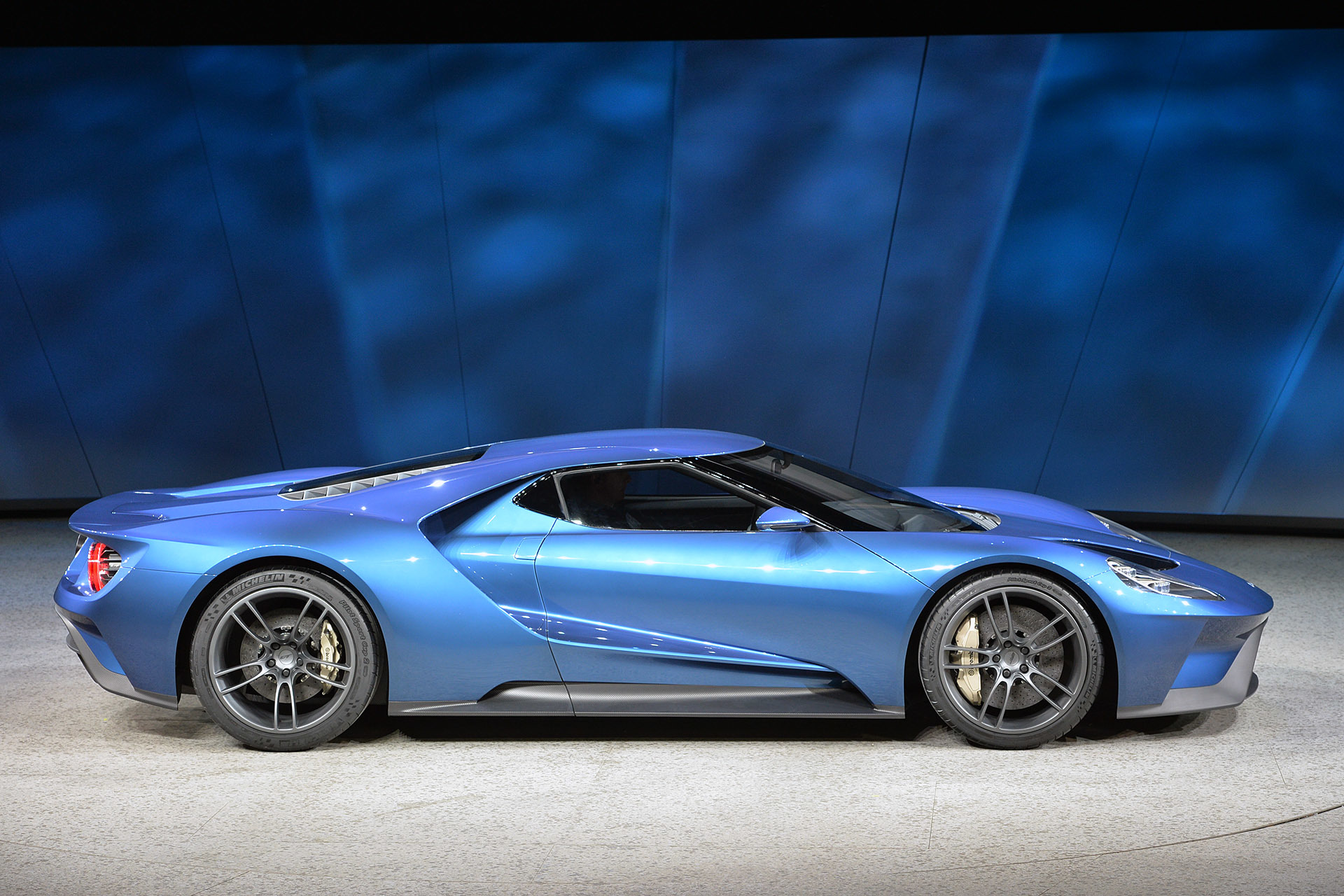
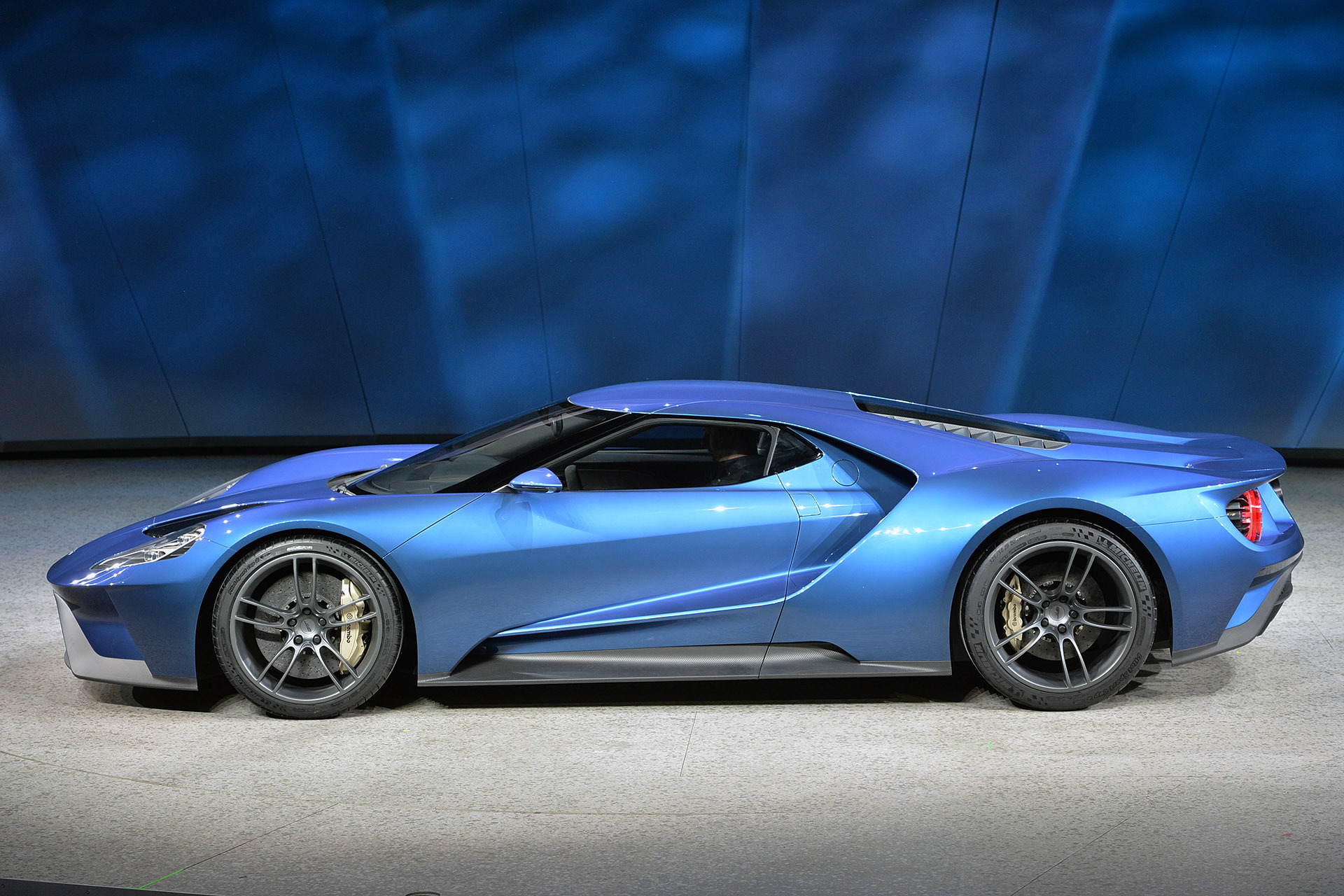
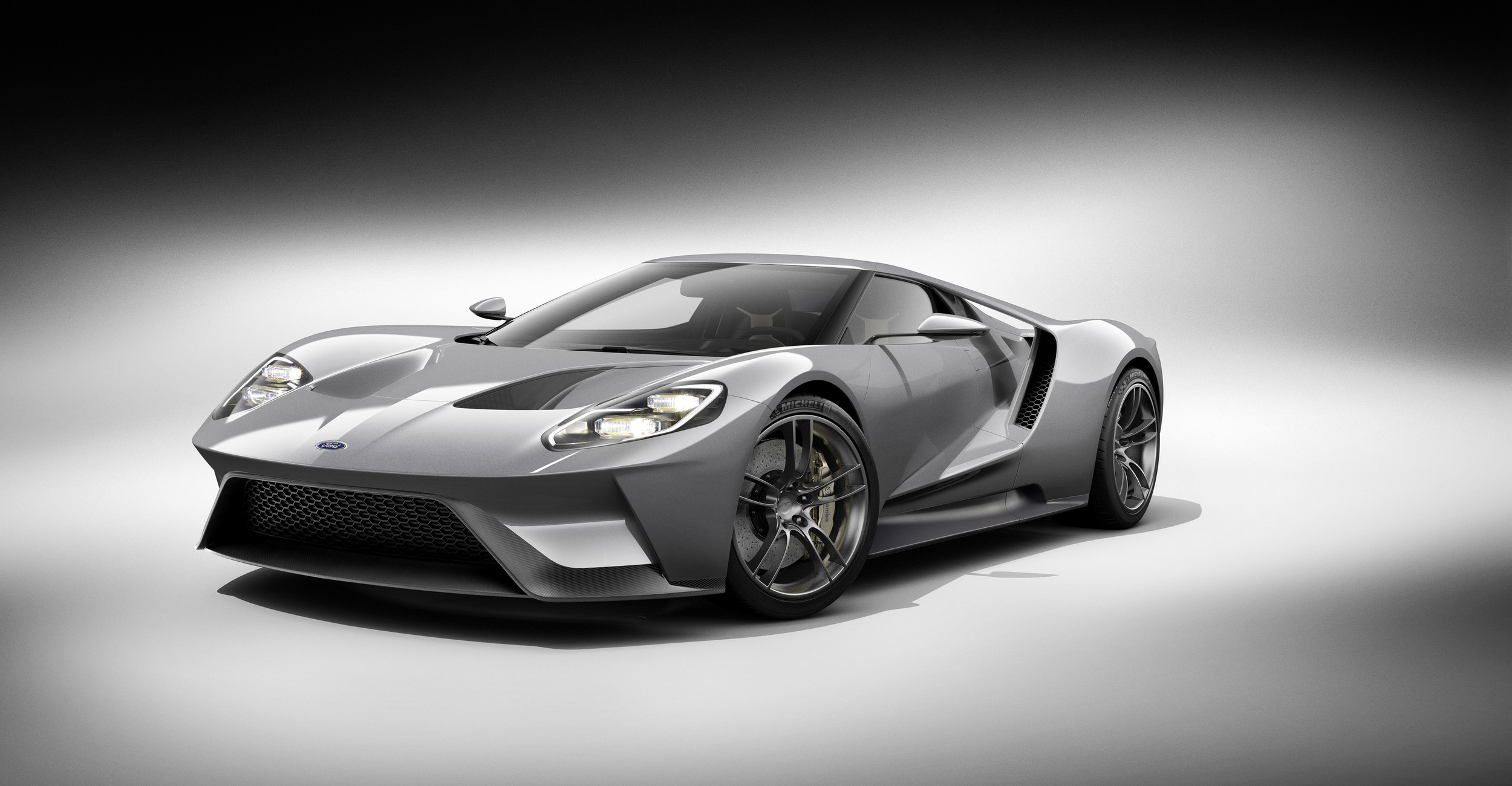
The Legend Returns: Ford has taken the wraps off of the next-gen Ford GT.

Launched at the 2015 Detroit Auto Show, the new GT packs a 3.5-liter twin-turbo V6 tucked away in the middle of its wheelbase and will push “more than 650 horsepower” to the rear wheels. Although Ford has yet to reveal the specific output or performance figures, it says the engine – derived from its Daytona Prototype engine, and mated to a seven-speed DCT – is its most powerful production EcoBoost ever. Of course, that’s not saying much considering that the EcoBoost name has been attached to the likes of the Explorer Sport and F-150 in the past, but we digress.

Also, this new GT has carbon-ceramic brakes and 20-inch wheels wearing Michelin Pilot Super Sport Cup 2 tires. The discs aren’t all that’s made from carbon on the new Ford GT, though: this supercar is built around a carbon monocoque with structural carbon-fiber body panels, and aluminum sub-frames front and back.

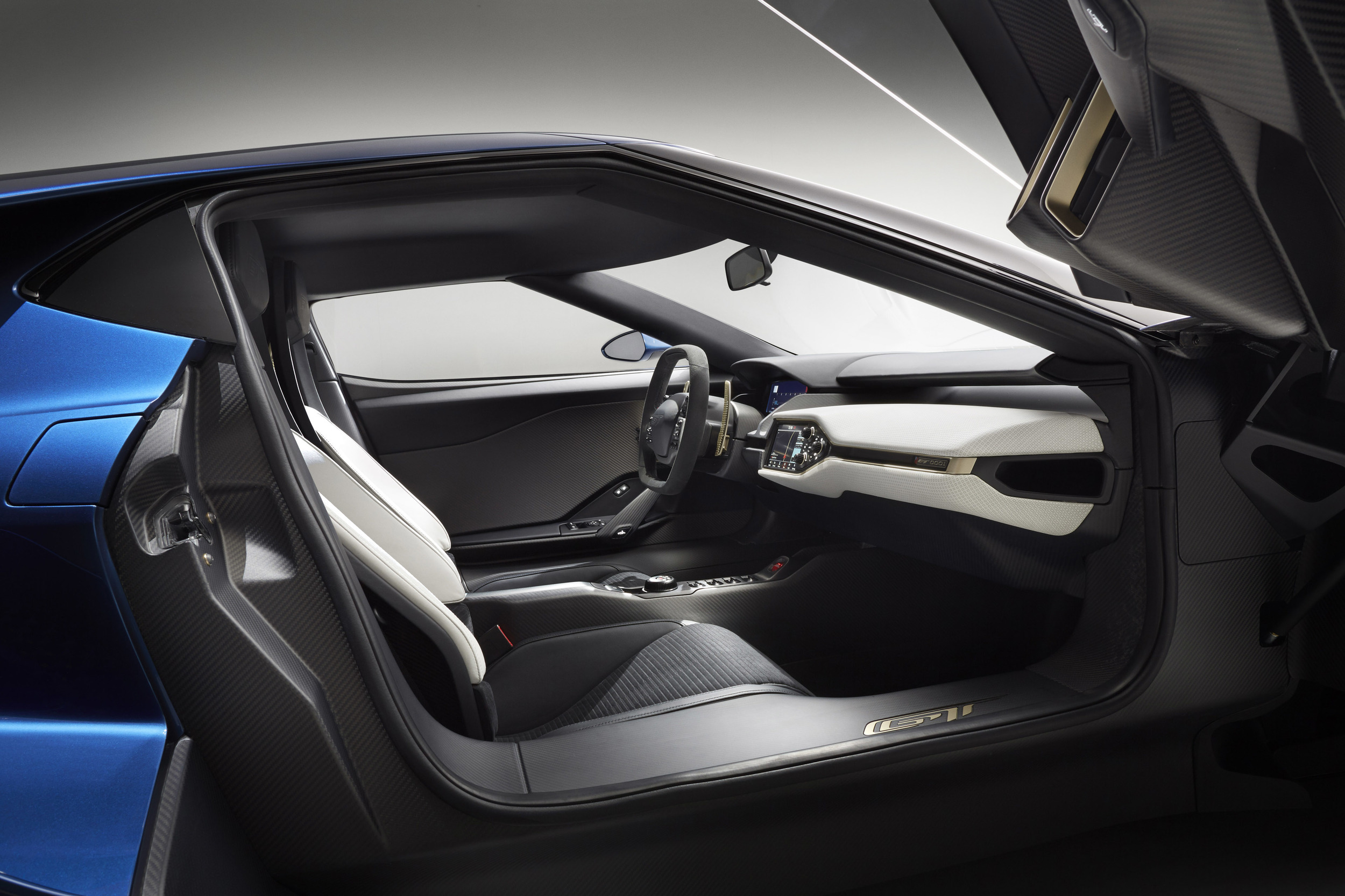
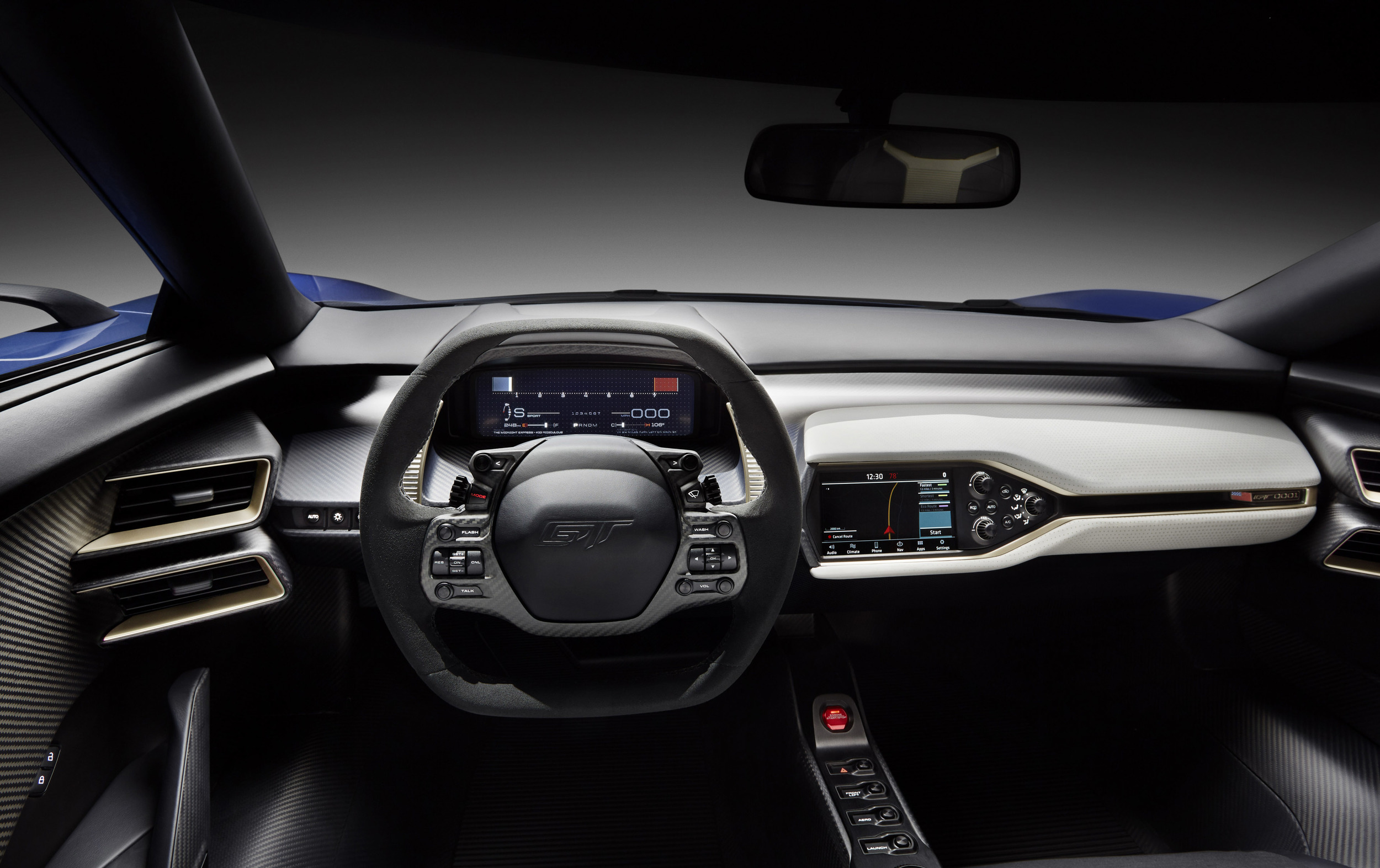
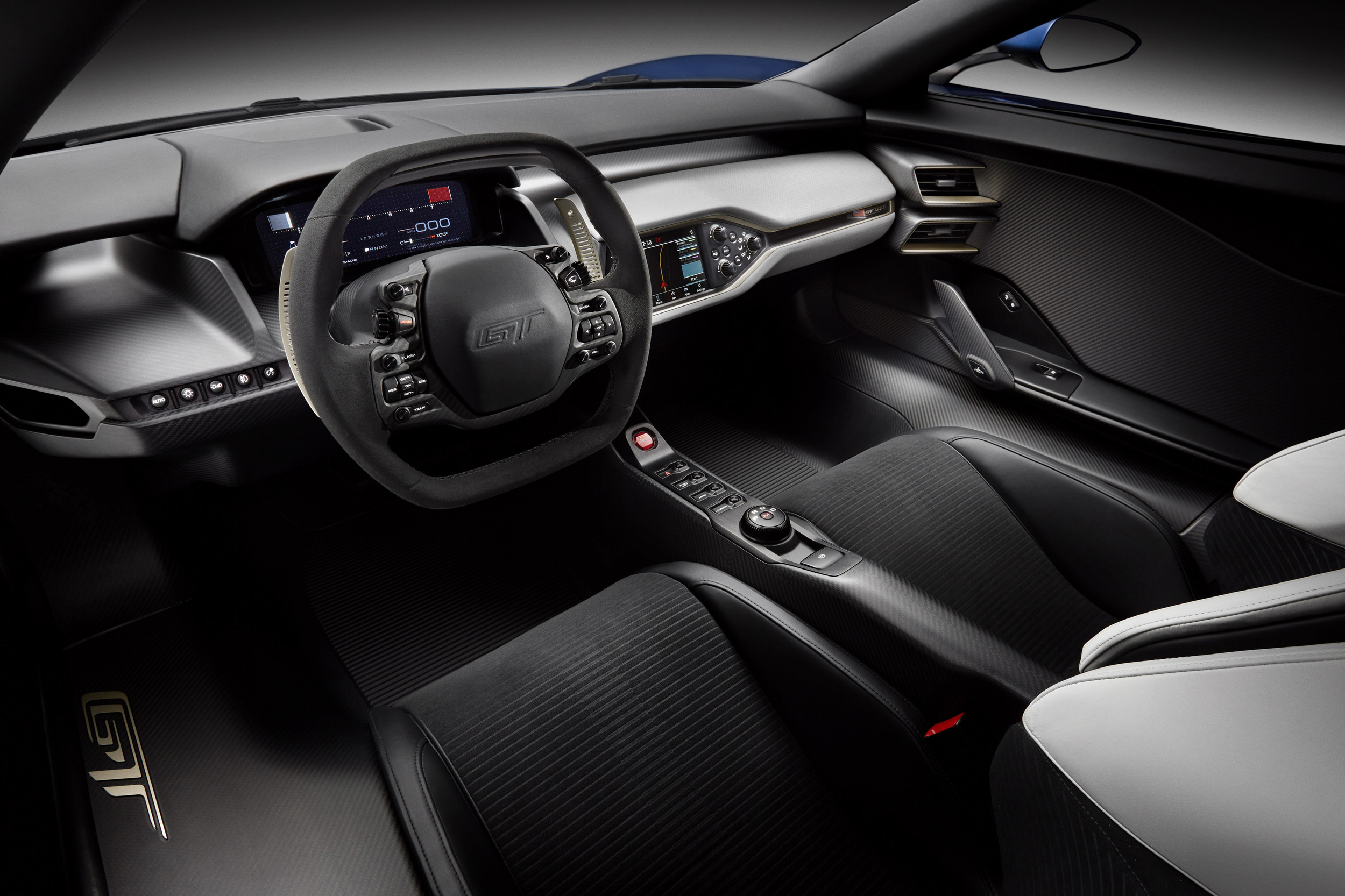
Ford designed the new GT with a narrower canopy than the last generation model, cutting the front aerodynamic profile and tapering towards the back. This beast is also equipped with active aero elements including an dynamic rear wing. Ford also integrated upward-swinging doors, which should make ingress and egress easier to and from the cockpit that’s fitted with racing seats, adjustable pedals and F1-style steering wheel, along with a fully digital instrument cluster.
As for us. we’re torn. On one hand, the car WILL be amazing, it’ll put down amazing numbers at the track where it belongs, and we are sure some people will be modifying it for the drag as well.

On the other hand, it’s not a V8, nor does it have a manual transmission. There’s no feeling “connected” with the car while driving it. Just step on it and go.

It’ll be fast, no doubt, but it lacks that V8-feel that belongs.

We completely understand Ford though, they have to keep in line with their Daytona race sibling. A well made V6 is nothing to scoff at, just look at the 3.8L VR38DETT in the Nissan GT-R, or the 2JZ-GTE in the Toyota Supra. All these motors put out great numbers, and they’re a very strong platform to build upon.

Back to our original thought though, we will miss the V8. As much as we like this car, we can’t “love” it like we do the ’05-’06 Ford GT.

Regardless, the new GT is set to enter production next year to celebrate the 50th anniversary of the GT40’s famous 1-2-3 finish at the 1966 running of the 24 Hours of Le Mans. By the time it does, we’re sure Ford will let us know just how fast America’s newest supercar will be.

https://www.youtube.com/watch?v=7Z56deqZ0lU

https://www.youtube.com/watch?v=I3exsCLuiMc

12-ford-gt-concept-detroit-1

11-ford-gt-concept-detroit-1

07-ford-gt-concept-detroit-1

08-ford-gt-concept-detroit-1

09-ford-gt-concept-detroit-1

10-ford-gt-concept-detroit-1

06-ford-gt-concept-detroit-1

05-ford-gt-concept-detroit-1

04-ford-gt-concept-detroit-1

02-ford-gt-concept-detroit-1

03-ford-gt-concept-detroit-1

010-ford-gt-1

009-ford-gt-1

008-ford-gt-1

006-ford-gt-1


Ford Press Release:

Ford Redefines Innovation in Aerodynamics, EcoBoost and Light-Weighting with All-New Ford GT Carbon Fiber Supercar

– All-new Ford GT supercar sets new standards for Ford innovation through performance with advances in light-weighting, aerodynamics and ultra-efficient EcoBoost® engine
– Ford GT features the most powerful EcoBoost production engine ever – a new twin-turbocharged Ford EcoBoost V6 producing more than 600 horsepower
– Ultra-high-performance supercar is Ford’s most extreme offering, infused with race-proven technology engineered to keep company with exotics when it goes into production in 2016

Ford today unveiled the all-new GT, an ultra-high-performance supercar that serves as a technology showcase for top EcoBoost® performance, aerodynamics and lightweight carbon fiber construction.

The GT is one of more than 12 new Ford Performance vehicles coming by 2020. It joins Focus RS, F-150 Raptor, Shelby GT350 and Shelby GT350R in the growing Ford Performance lineup.

Beginning production late next year, the GT hits the road in select global markets to celebrate the 50th anniversary of Ford GT race cars placing 1-2-3 at the 1966 24 Hours of Le Mans.

“As we at Ford drive innovation into every part of our business, it’s worth remembering that our first innovation as a company was not in a laboratory, but on the racetrack,” said Mark Fields, Ford president and chief executive officer, referring to Henry Ford’s win of a 1901 car race that inspired financial backers to invest in his company. “We are passionate about innovation through performance and creating vehicles that make people’s hearts pound.”

The all-new GT supercar features rear-wheel drive, a mid-mounted engine, and a sleek, aerodynamic, two-door coupe body shell. It is propelled by the most powerful EcoBoost production engine ever – a next-generation twin-turbocharged EcoBoost V6 producing more than 600 horsepower.

The GT makes extensive use of lightweight materials, including carbon fiber and aluminum – enabling outstanding acceleration and handling with improved efficiency.

Ford’s commitment to and capability in delivering technologies typically offered only in elite vehicles is evident in the GT. These include advanced active aerodynamics, such as a deployable rear spoiler, and a host of material and technology innovations to help better serve the driver, such as SYNC® 3 – the latest version of Ford’s advanced connectivity system.

“The GT is the ultimate execution of an enthusiast supercar,” said Raj Nair, Ford group vice president, Global Product Development. “GT includes innovations and technologies that can be applied broadly across Ford’s future product portfolio – another proof point that Ford continues raising the performance bar while ultimately improving vehicles for all of our customers.”

Carbon fiber innovation
Few innovations provide a more wide-ranging performance and efficiency advantage than reducing weight. All factors of a vehicle’s capabilities – acceleration, handling, braking, safety, efficiency – can improve through the use of advanced, lighter materials.

The all-new GT features advanced lightweight composites, which will help serve Ford’s entire product lineup moving forward. With the broad application of structural carbon fiber elements, the GT will exhibit one of the best power-to-weight ratios of any production car.

Anchored by a carbon fiber passenger cell, the GT features aluminum front and rear subframes encapsulated in structural carbon fiber body panels. Carbon fiber is one of the world’s strongest materials for its mass – enabling an ultra-stiff foundation for chassis components, while creating a lighter overall package for increased dynamic performance and efficiency.

Most powerful production EcoBoost ever
Ford EcoBoost technology is available in every new Ford car, utility and light-duty pickup in North America beginning this year.

EcoBoost engines power a growing number of Ford performance models, including the new Mustang, just-announced F-150 Raptor, as well as Fiesta ST and Focus ST.

Based on the same race-proven engine architecture serving Ford’s IMSA Daytona Prototype endurance racing efforts, the next-generation twin-turbocharged 3.5-liter EcoBoost V6 in the GT features a wide powerband with impressive time-to-torque characteristics.

The engine demonstrates remarkable efficiency – a key attribute of its endurance racing-derived powertrain, where exceptional performance combined with efficiency is a critical competitive advantage.

Ford’s twin-turbo EcoBoost V6 raced to three wins in its first season of the IMSA TUDOR United SportsCar Championship in 2014, including a win in the prestigious 12 Hours of Sebring, along with seven podiums over more than 15,000 endurance racing miles.

The GT features an all-new, port/direct dual fuel-injection setup to improve engine response, plus a low-friction roller-finger-follower valvetrain. The twin-turbocharged EcoBoost V6 will be paired with a seven-speed dual-clutch transaxle for near-instantaneous gear changes and exceptional driver control.

Aero innovation gets active
Aerodynamic efficiency is at the heart of the GT design, actively reducing drag while aiding downforce and stability.

From its optimum tear-drop shape to its aircraft-inspired fuselage and visibility-enhancing curved windshield, every slope and shape is designed to minimize drag and optimize downforce.

Although each surface on the GT is functionally crafted to manage airflow, it also features fully active aerodynamic components to improve braking, handling and stability.

An active rear spoiler is keyed to both speed and driver input, reactively deploying and adjusting its height and/or pitch angle depending on conditions.

Designed for purpose
While it shares a legacy with classic Ford racing and performance cars, GT is a fully contemporary and functional shape that communicates modernity and pure beauty.

The state-of-the-art chassis is suspended by an active racing-style torsion bar and pushrod suspension, with adjustable ride height. The 20-inch wheels are shod with Michelin Pilot Super Sport Cup 2 tires featuring a unique compound and structure designed specifically for the Ford GT. Multi-spoke wheels encircle carbon-ceramic brake discs at all four corners.

The narrow-profile canopy reduces frontal area and caps a purposeful interior that provides state-of-the-art technology to ensure control, comfort and safety. The two-seat cockpit is accessed by upward-swinging doors, and features driver and passenger seats integrated directly into the carbon fiber passenger cell.

This configuration significantly reduces seating hardware and weight, and provides a consistent and direct sensory connection to the chassis. The fixed seating is combined with adjustable pedals and steering column to accommodate a very wide range of driver statures.

An F1-style steering wheel integrates all necessary driver controls, creating a stalkless steering column that allows uncluttered access to the transmission paddle-shift controls. A fully digital and configurable instrument cluster provides a wealth of driver-focused data. The display is configurable for multiple driving environments and different driving modes.

“While we hope enthusiasts rejoice about this all-new GT, all Ford customers will benefit from the ultimate performance Ford and its new-generation innovations,” said Nair.

Viper: DNA of a supercar

0

https://www.youtube.com/watch?v=8GDeTk_zJnI
From Dodge:
“The compelling story of how a team of dedicated designers and craftspeople turned a muscle icon into a 645hp world-class supercar. The fifth generation Viper’s origin is a journey of pure passion overcoming every obstacle thrown its way. See why the Viper is created like no other car in the world.”

Yup, we’ll take two, in Black please.

We love the Viper (heck, we love all V8/V10 powered Mopar). This snake is America’s most under-appreciated supercar. While the C7 Z06 is getting all the attention, the SRT Viper quietly continues to impress.

Car and Driver catches GM testing the upcoming “Zora” – a mid-engine, 2017 Corvette ZR1?

0

2017-Chevrolet-Corvette-artists-rendering-301-876x535

Mid-Engine Corvette fans, your time has come. “Zora” is alive and well. Car and Driver recently snapped up these photos of GM testing their new mid-engine performance flagship car.

Don’t mind the hideous body camouflage and paneling (notice the Chevy SS front clip), this is protocol for manufacturer testing. while the cabin itself, roof panels, and exterior mirrors are pieces from the current Corvette Stingray. Other points of interest: Notice the fuel-filler located on the driver’s-side B-pillar, and the cooling intakes located down the rocker panels.

2017-Mid-Engined-Chevrolet-Corvette-1151-876x535

2017-Mid-Engined-Chevrolet-Corvette-1041-876x535

According to Car and Driver, they estimate a projected wheelbase of 98.9 inches, some eight inches shorter than that of today’s Corvette. Obviously, a tighter wheelbase quickens steering response and cinches up the turning radius. C&D figures that 60 percent of this potential Corvette ZR1’s mass will be supported by the rear wheels, enhancing launch traction and ridiculous braking. There are rumblings that the engine bay may eventually play host to a small, 3.5- to 4.0-liter V-8 that could depart from the traditional pushrod motor.

2017-Mid-Engined-Chevrolet-Corvette-1021-876x535

The C7 was developed on a pretty modest budget and it’s selling like hotcakes. Hopefully now the Corvette team gets everything they need to make a killer Corvette and a Cadillac halo car to take on the R8.

These recent images indicate that the C8 Zora sports car is on schedule to arrive in showrooms in about 20 months, as a 2017 model, and it will be sold alongside the front-engined Corvette.

Lamborghini Countach goes wide open on the Autobahn

0

These Autobahn videos always amaze how quickly traffic gets over into the slower lane. Than again seeing a Lambo in the rear view probably helps. However, that’s how it usually works on the Autobahn. We find it very relaxing to drive there – go as fast as you feel safe with and keep to the right. Pay as much attention to the mirrors as you do looking forward and you will be fine.

We also love how the driver of the Countach starts to back off the throttle as the starts falling apart at high speed. The Countach was an icon, a looker – but it was poorly built. But, this is a great video, and the engine still sounds amazing to our ears. Enjoy.

2015 Corvette Z06 Absolutely Destroys Virginia International Raceway, but GM left out one tiny detail….

0

https://www.youtube.com/watch?v=sXQn25tpgxU

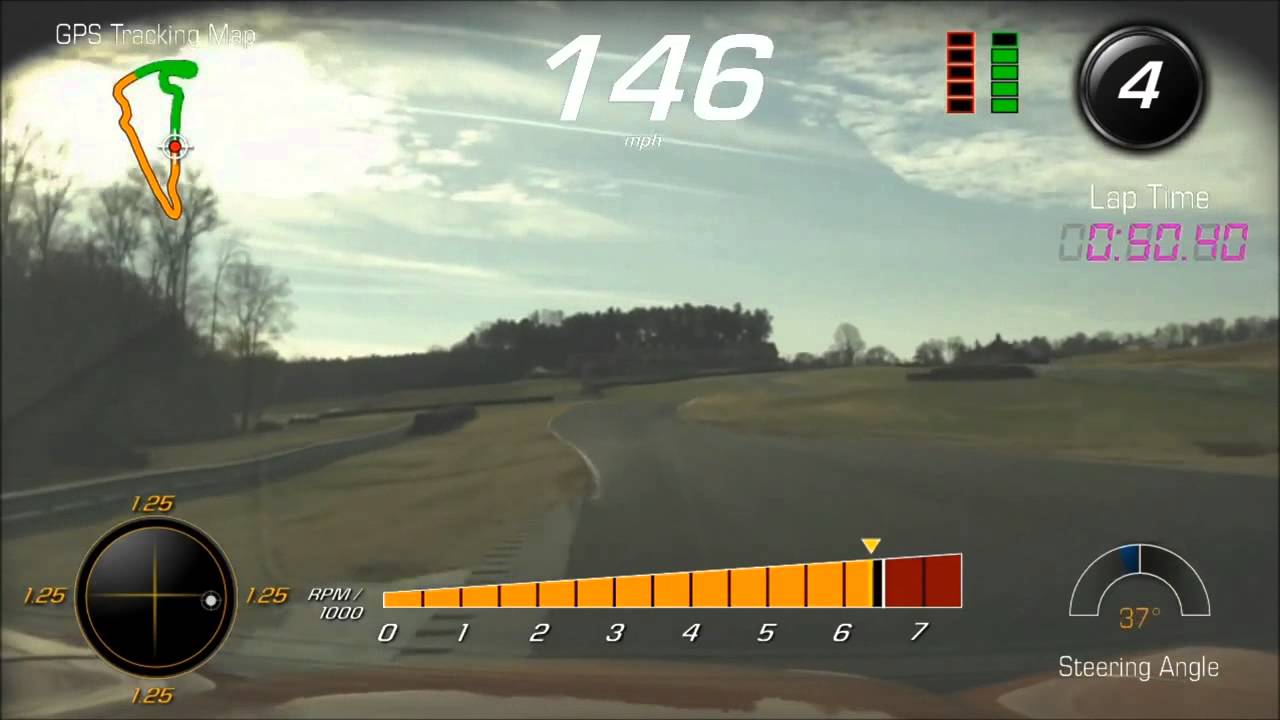
The new Corvette Z06 recently ripped an absolutely quick 2:41.3 at Virginia International Raceway (VIR), and General Motors has released an HD video of the lap recorded using the car’s intuitive Performance Data Recorder (PDR). This lap is so quick, it’s actually 2 seconds faster than the record-holding Porsche 918 Spyder hypercar, which clocked a 2:43.1 time recently.

That new 2015 Z06 time is really quick and all, but GM has failed to mention that VIR has seen some pretty substantial track improvements recently, especially near the Oak Tree turn. Some cars are actually seeing 2-3 second improvements simply due to the track change. The Old Oak Tree turn is much faster now.

It’s funny that they left that small detail out.

Here is some information on the 2013/2014 Track Changes and improvements that took place: Official VIR press release

Excerpt:

“Due to the unfortunate event of VIR’s Mighty Oak falling down, we have had to make some changes to the entire Oak Tree Turn. It was our intention to wait until winter to make these changes and to release this announcement for 2014, but a few recent incidents have shown we need to take action now. The station that was formerly known as 11A and was the next station in line after Station 10 has been moved across track to Driver’s Left and is now Station 11. Positive FIA apex curbing has been added to the Oak Tree turn at Driver’s Right. Both of the previous corner stations have been removed and the area has been graded flat and seeded.

Just sayin’

Regardless, we are absolutely in love with the new Z06, and it’s obvious to us that GM has produced a winner, well, podium at least.

2015 Chevrolet Corvette Z06 vs. Lamborghini LP570-4 Super Trofeo Stradale

0


The new 2015 Z06 has taken alot of heat lately for some questionable performance issues. We’ve seen it get walked by the ’14 SRT Viper, we’ve all heard about the ‘Heat Sink’ issues that are actually just the result of a factory de-tuned ECU.

However, now that there are more than a few C7 Z06’s on the road, some are getting into the hands of skillful drivers – and as you can see in the video, we are starting to see the new Z shine under pressure. We don’t want to spoil who wins, but take a gander at the LP570-4 vs C7 Z06 above.

The Ferrari Testarossa Story.

0

Aw, Nothing embodies the Miami drug wars of the 1980’s quite like the polarizing 512TR Testarossa. Some love it, some hate it. The performance is sub-par compared to the performance machines of today, but there is no denying the timeless and iconic style of the Ferrari Testarossa. Some would even argue that it was the 512TR that put Maranello on the map in the mid-80’s.

Here at HPK, we love the Testarossa. Especially the white one in the Wolf of Wall Street, but we digress.

Testarossa:Means “red head” in Italian, comes from the red-painted cam covers on the flat-12 engine. The double entendre with a red-headed woman was intentional – Ferrari and Pininfarina regularly use descriptive terms related to a female’s body when describing the style of their automobiles.

2016 Lexus GS-F Revealed

0

b32i7772-edit

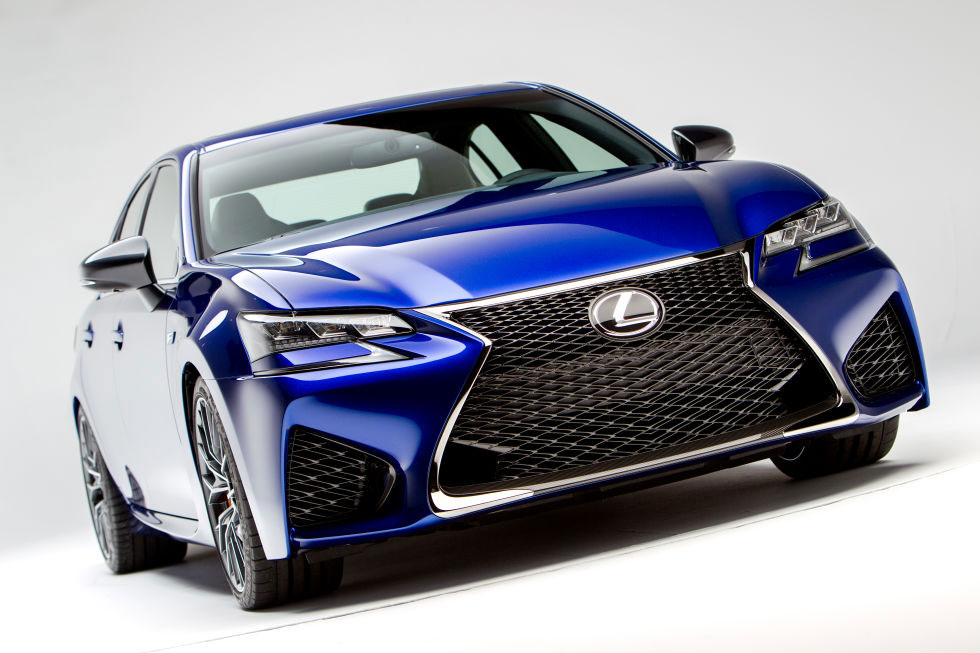
Here are the first official images of the 2016 Lexus GS-F. Powered by the RC-F’s naturally aspirated 5.0 V8, this new performance sedan makes 467 HP at 7,100 RPM and 389 pound-feet of torque between 4,800 and 5,600 rpm. This power is channeled through Lexus’ eight-speed transmission.

Lexus is utilizing its Torque Vectoring Differential from the RC-F, which uses three modes – Standard, Slalom, and Track – to manipulate torque delivery to better suit different driving conditions.

b32i7964-edit

Lexus has already released a few specifications about the GS-F, we already know the sedan weighs 4,034 pounds and will roll on 19-inch wheels with 255/35-series tires up front, and 275/35 tread out back.

This is a step in the right direction for Lexus, but we are a bit disappointed – especially considering the numbers being thrown down by competitors like the BMW M5 and Mercedes-Benz E63 AMG, not to mention the new 640-hp, 200-mph Cadillac CTS-V that’ll also debut at next week’s Detroit show.

b32i8062-edit

We are thinking that this car is more like a legit CTS V-sport / Audi S6 competitor, rather than a CTS-V / M5 / RS7 etc. brawler. If Lexus prices this car around $70k, it could shake up that 2nd-tier of midsize sport sedans. It’s also the only one in that category with a N/A engine, and the 2nd lightest (next to the V-sport). Again, if they price it right, they could have a winner.

b32i7880-edit

However, we were still hoping that Lexus would come out of the gates swinging with a 600 HP car that could compete right away with BMW and AMG. Here’s to hoping this is just a baby step towards higher power performance offerings from Lexus’ F-division.

Hellcat Challenger takes on 2015 Corvette Z06

0

Here is the story: The C7Z owner chimed in already over on the Corvette Forums. He spun each race, and apparently there is a run he won by a second, but they didn’t post. Also one on the strip and another against the Viper TA. Don’t know if we will ever see those since the vids are from the hellcat gang.

I will say, you can see him spinning a bit on the hits, however, the pull continues on the Hellcat side in gear with the C7Z in traction. Either the cars are so close from a roll on that the slightest mistep from either side means a loss (which judging by both cars trap speeds is plausible), or the C7Z is spinning a lot more than what it looks like from the video above.

I never thought I would see the day when the new Z06 was released and was getting walked by cars in, above, and below its class. Sad thing is a bunch of guys will have to void their warranties and risk blowing the motor before we see the days of the C6Z again.

We are a little saddened for the Vette and we are not even GM fans.