Well, the new SRT Hellcat will be sold for $59,900, much less than the anticipated and rumored $70,000 figure.
As for the hard numbers, the tier-one Hellcat is anticipated to get from 0-60 MPH in the “mid 3s,” says the President and CEO of Dodge brand, Tim Kiniskis – and this behemoth will sprint all the way up to 199 miles per hour.
The 707-hp, 650 pound-feet of torque earth-rotator contains 91-percent new parts compared to the standard 392 engine, so this isn’t just the SRT engine with a blower on top – the crank, pistons, connecting rods, and bottom-end are all new. This monster takes 80 horsepower just to drive the supercharger. In fact, the new SRT Hellcat is so powerful that Chrysler needed new dynos to test the engine – the ones used in Viper development weren’t adequate.
To bring you back down from warp speed, the Hellcat will benefit from massive 15.4-inch front brakes and a three-mode adaptive suspension (normal, street, race) Buyers will have a choice of a rev-matching eight-speed automatic or six-speed manual. The 8AT gets a 30-percent increase in its torque capability thanks to upgraded internals, and the manual transmission is derived from the Viper.
Also, since this amount of raw power can’t be trusted by anyone – the Hellcat will get a valet mode key which mandates second-gear starts, a 4,000-rpm rev limit and lowered power overall, down to a measly 500 HP or so.
The 2015 Challenger will hit showrooms next month.
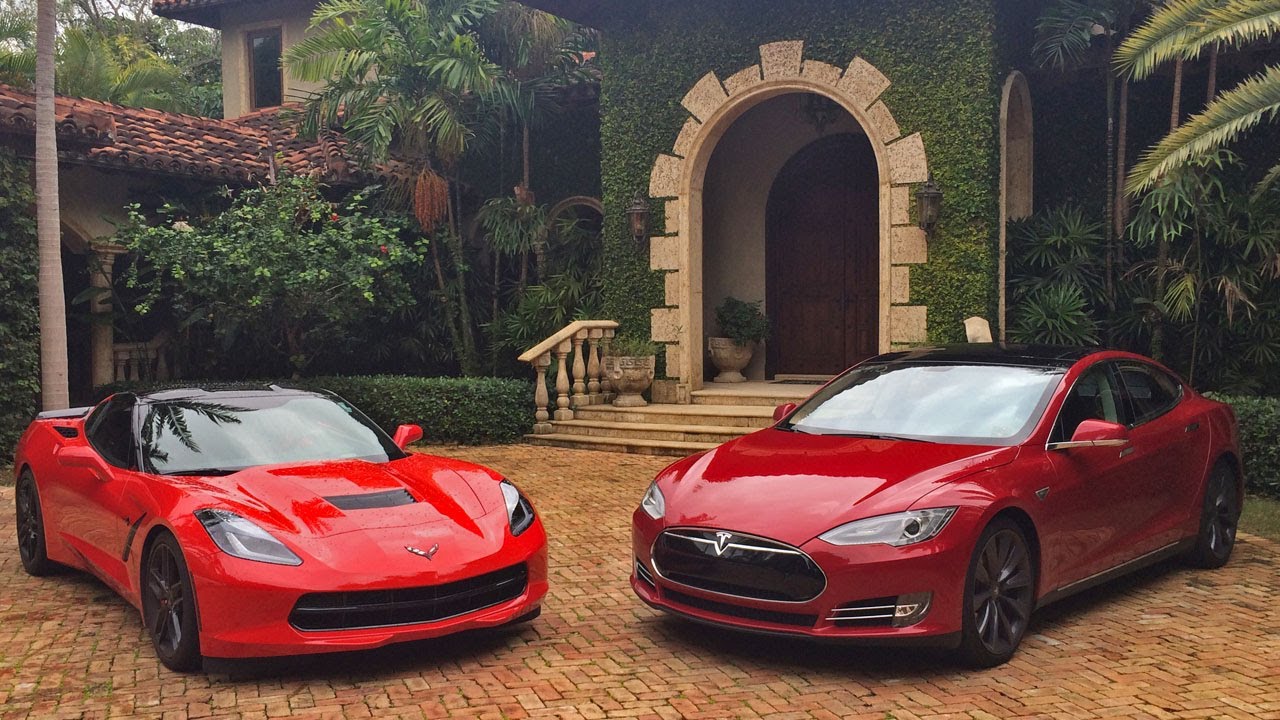
Just so we are all on the same page: The Tesla Model S is 100% battery powered. The C7 Corvette is powered by a 455-HP 6.2 LT1 engine.
The Tesla weighs 4,464 lbs, while the C7 ‘Vette weighs only 3,200 lbs
Now that the stage is set, watch the video above. We have a 2014 Tesla Model S P85 electric car, drag racing a 2015 C7 Corvette Z51 in the 1/4 mile.
What we saw in this video made us spit out our coffee. The results of this race may be debatable, but what isn’t up for discussion is how fast this Tesla is for being an all electric vehicle. Are electric cars the future for performance automotive enthusiasts? In our opinion, there is something about a V8 that is working hard to impress you down the dragstrip that wins us over every time, and we hope that the V8 will live long and prosper.
We will give credit where it’s due, so we have to respect the Tesla for what it is. After all, Tesla is all-American. Enjoy the video. It’s a great time to be alive if you are into fast cars.
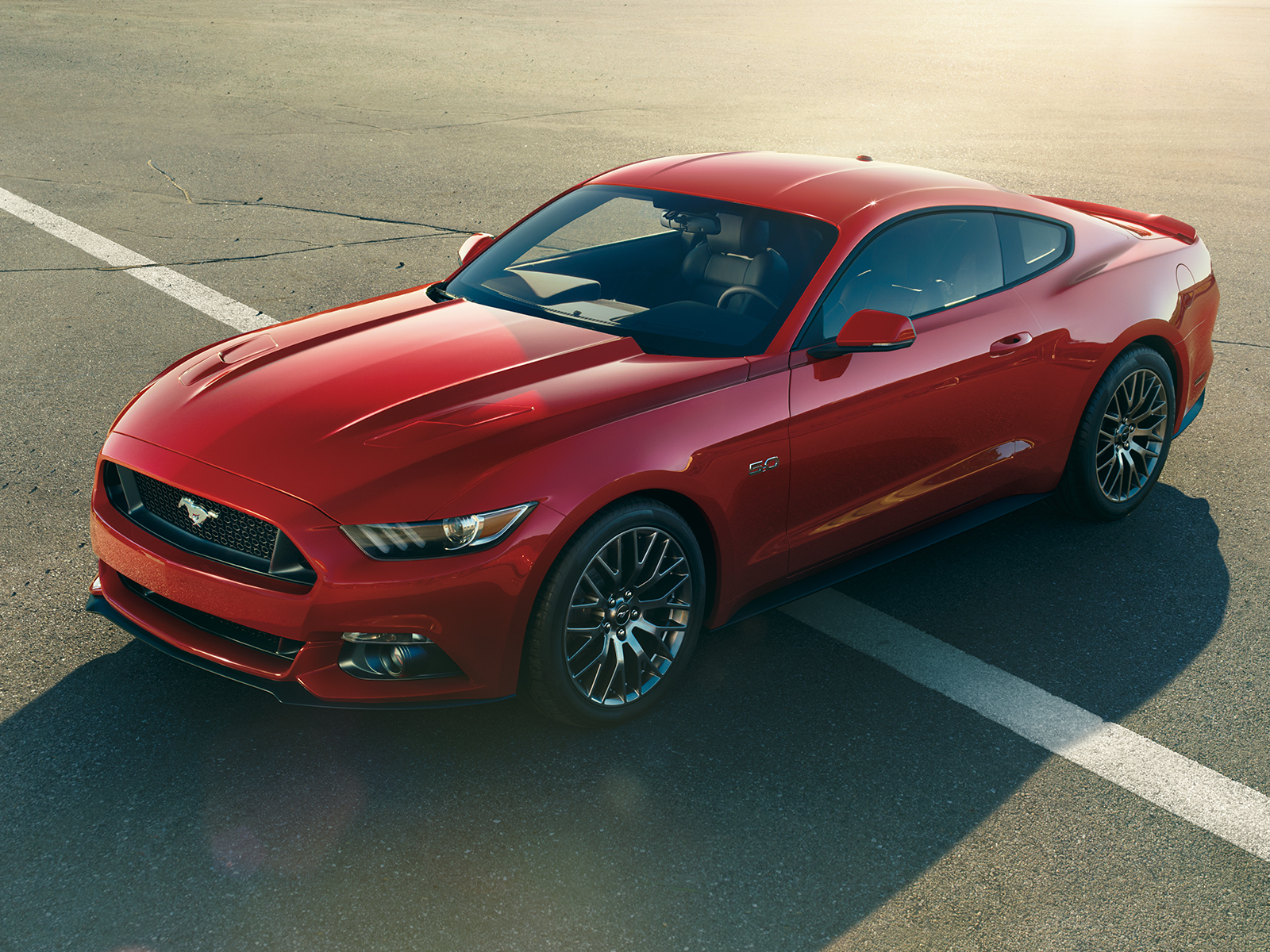
Ford has officially revealed the vitals for the 2015 Mustang.
We can expect 435 HP and 400 pound-feet of torque out of the 5.0 V8. The GT packed on 87 pounds, and now weighs 3,705, and the GT with an automatic gained 54 pounds to now weigh 3,729 pounds. The GT weighs a bit more than we hoped, but the 435/400 numbers should offset this nicely.
The 2.3-liter turbocharged EcoBoost four-cylinder makes 310 hp and 320 lb-ft, and it’s the first turbo Mustang since the 1986 SVO.
The 3.7-liter V6, which has by default become the entry-level model, is rated at 300 hp and 280 lb-ft. Power is down slightly from 2014’s output of 305 hp to slot the naturally aspirated six-cylinder below the EcoBoost four banger.
The Mustang will start at $24,425, including destination charges, when it goes on sale later this year.
Below is the Ford press release:[showhide type="pressrelease"]
Horsepower Unleashed – Motivating the All-New Ford Mustang with Improved Power-to-Weight Ratios
5.0-liter V8 headlines all-new Ford Mustang lineup with 435 horsepower and 400 lb.- ft. of torque and improved power-to-weight ratio
New 2.3-liter EcoBoost® brings turbocharging and direct injection to Mustang with 310 horsepower and 320 lb.-ft. of torque – best-ever power density from a Ford engine
Manual transmission provides smoother shifting than previous Mustangs; automatic transmission features steering wheel-mounted paddle shifters and downshift rev- matching
DEARBORN, Mich., July 17, 2014 – The all-new 2015 Ford Mustang offers three great engines including a standard 300-horsepower V6, a brand-new 310-horsepower EcoBoost® or an upgraded 435-horsepower V8. Each powerplant is available with either a manual or automatic transmission that makes the pony car a great all-around performer – no matter how the equipment is mixed and matched to suit any individual driving style.
The fewer the pounds a car carries for every unit of horsepower generated by the engine, the quicker and nimbler it feels, making power-to-weight ratio a key measure of performance. A recent study by Autoblog of cars currently available in the U.S. market puts Mustang at the top of the charts in power-to-weight ratio for all three price categories a customer can specify.
Mustang extends its lead further for 2015 with the EcoBoost-powered fastback now carrying fewer than 11.4 pounds per horsepower; Mustang GT has as few as 8.52 pounds per horsepower.
Less is more, EcoBoost comes to Mustang
The addition of a new 2.3-liter EcoBoost engine brings turbocharging to the Mustang powertrain lineup. This engine was designed specifically for Mustang, to meet the needs of drivers looking for outstanding performance and fuel efficiency.
The geometry of the EcoBoost intake manifold and turbocharger housing has been optimized to provide better breathing and higher output in Mustang. Producing 310 horsepower and 320 lb.- ft. of torque, the 2.3-liter EcoBoost engine fits the bill for a true Mustang powerplant – with the highest power density yet from a Ford engine.
“This EcoBoost engine delivers the healthy output Mustang drivers expect, regardless of the car’s speed,” said Scott Makowski, EcoBoost powertrain engineering manager. “It delivers where a Mustang driver expects it to – with a broad, flat torque curve and great driveability under any conditions.”
The newest member of Ford’s global EcoBoost engine family, the 2.3-liter continues to take advantage of state-of-the-art technologies including direct fuel injection, twin independent variable camshaft timing and turbocharging to produce big-engine power and torque with improved fuel efficiency.
The 2.3-liter EcoBoost is the first Ford engine to use a low-inertia twin-scroll turbocharger that provides quicker boost response while enabling lower emissions and improved efficiency. The cylinder head features an integrated exhaust manifold that separates the inner and outer pairs of cylinders into each of the two inlet passages to the turbo.
Keeping the exhaust pulses separated from the next cylinder in the firing order virtually eliminates mixing losses and maximizes the pulse energy to the turbine wheel. The result is similar performance to a more complex twin-turbocharger configuration, meaning quicker turbine spin-up and torque delivery when the driver needs it for passing maneuvers.
The separated exhaust ports also enable the exhaust valves to stay open longer for reduced pumping losses that improve specific fuel consumption compared to a single-scroll turbocharger configuration.
With a compact mill generating nearly 135 horsepower per liter and more than 139 lb.-ft. of torque per liter – powering a performance car whose drivers are more inclined to use it – ensuring engine durability was critical. Enhancements to the Mustang EcoBoost engine to withstand the added stresses include:
Forged-steel crankshaft
Piston-cooling jets
Steel piston ring carriers
Premium bearing materials
Upgraded valve seat materials
Forged-steel connecting rods
High-pressure die-cast aluminum cylinder block with ladder-frame bearing caps
Deep-sump, die-cast aluminum oil pan
The beating heart of a pony
No Ford Mustang engine lineup would be complete without a great V8 engine at its core. The 5.0-liter V8 powers into a new generation with a host of upgrades that help it breathe better, especially at higher engine speeds. Many of these changes are derived from lessons learned in developing the special-edition 2012 Mustang Boss 302.
Getting air into the cylinders and exhaust out is key to generating more power and torque from any engine. That has been the focus in the development of this V8, which features:
Larger intake valves
Larger exhaust valves
Revised intake camshafts
Revised exhaust camshafts
Stiffer valve springs ensure valves close completely at high rpm
New cylinder head casting – revised ports provide straighter path to the valves for less restrictive intake and exhaust flow; combustion chamber modifications accommodate larger valves
Sinter forged connecting rods are lighter and more durable for high-rpm operation
Redesigned piston tops – deeper cutouts clear the new larger valves
Rebalanced forged crankshaft to support higher-rpm operation
These upgrades have boosted output of the V8 to 435 horsepower and 400 lb.-ft. of torque.
A new intake manifold includes charge motion control valves to partially close off port flow at lower engine speeds. This increases the air charge tumble and swirl for improved air-fuel mixing, resulting in better fuel economy, improved idle stability and lower emissions.
The variable camshaft timing on the intake side now has a greater range of adjustment available thanks to mid-lock phasers. This enables better optimized control of the valve timing over a broader range of engine speeds and loads for improved fuel economy and emissions.
Shifting gears
More than most drivers, Mustang owners like to take control and shift for themselves. Whether they select a fully manual gearbox or the updated automatic transmission, the experience will be better than in any previous pony.
The manual has a new shift linkage design for easier engagement and improved precision. The shift lever is now positioned closer to the driver and away from the cupholders, creating a clear path for shifting.
Mustang blends outstanding all-around performance and everyday usability. Drivers who prefer to let the car handle the shifting during their daily work run, but who still want to take control when the roads get twisty, will appreciate the new steering wheel-mounted shift paddles with rev-matching downshifts – now standard with the SelectShift® six-speed automatic transmission.
The automatic also features a redesigned case with cast-in ribs that help make it stiffer and reduce weight. Internally, clutches are optimized and operating temperature increased to reduce friction. The output shaft is now supported by a ball bearing that enables a top speed of 155 mph for Mustang GT.
With a choice of powertrains to suit driving preferences and lifestyles, the new Mustang has cutting-edge technology under the hood to match its modern design. Yet regardless of engine choice, the car remains quintessentially Mustang.
Supposedly, both cars are 100% bone stock. This is a 2014 LT1 Stingray Vette vs 5.8L GT500 662hp, both racing from a dig. It’s interesting to see the lightweight C7 get the jump, but the almighty 662 HP GT500 gets some steam built up and runs it down. Keep in mind this is a 3,200 lb Corvette vs a 4,040 lb GT500.
Even though the big Mustang weights over 800 lbs more than the Corvette, the GT500 also has an earth-rotating 662 HP, compared to the 455 HP out of the lighter Corvette. To average things out, both of these demand right around the same price tag: $55,000.
Here at Horsepower Kings, we are very fond of the 2003/2004 SVT Cobra. Afterall, the ‘Terminator’ was the car that supercharged the horsepower wars back in 2003.
You see, the 03/04 Cobra was the first ‘muscle car’ to come from the factory with a supercharger and bulletproof internals. John Coletti, the mastermind at SVT at the time, could forsee that the typical Cobra owner would crank up the horsepower as soon as the car left the dealer lot – whether it be with a pulley, tune and exhaust – or a complete Whipple/Kenne Belle blower swap.
Because of this, these cars became legendary, and are known to reliably push 700-800RWHP without touching any of the stock internals (piston, crank, rods, block). Those cars were an absolute gamechnger at the time, and many believe that the ‘Terminator’ planted the seed for the ridiculous horsepower numbers we see from the manufacturers today.
We salute you, John Coletti.
Anyways, all that to say that this video makes us sick. One less Terminator on the road. Let’s hope it can be repaired
Ouch, that hurt our wallets just watching the video. This guy doesn’t seem to have a feel for this car yet, but decides to get brave anyways. Terrible reaction times. Slow hands. Poor counter steering. What makes people who are not trained on a racetrack think that they can handle a car?
It all goes sour at the 3:25 mark of the video. We can’t understand what they are saying, but it’s probably something like “you idiot.”
Could Ford be planning on a 2017 model year release for this SVT Cobra? Is it realistic to think that Ford may be developing this SVT Cobra with an all aluminum body with carbon fiber panels?
Update:Here is what appears to be the Flat Plane Crank variant running through its paces:
The engineers at SVT have been very tight-lipped over the new SVT variation of the S550 Mustang, but today we finally get a look at this car, undisguised – thanks to our friends at Mustang6G.com
It’s interesting to note some key features: prominent hood scoop, functional front fender vents, aggressive front splitter and a front fascia that lends screams the “Cobra” moniker expected of this hi-po model. Also notice the Michelin Pilot Super Sport tires and quad tip exhaust that have been seen in early prototypes. Also making an appearance is wider read hips and front fenders. Is Ford taking cues from the Z06 model?
We also see a second Mustang being tested with a much different exhaust note towards the end of the video. Could this be an SVO, Ecoboost-powered variant?
We are expecting several different models of the next SVT Mustang:
SVT:
GT350 $48k
GT350s $55k
GT350r $68k
The next SVT Mustang is expected to be due in mid-2015.
Motor Trend recently took a crack at the reworked 2015 M3 Sedan. Can BMW restore the faith of the M-Sport faithful? The 2015 M3 ditches the screaming V8 of the last generation for an all new twin turbocharged inline six producing 425hp and 406lb-ft of power. Nothing compares to the screaming sound of a high-revving V8, but times are a changing, atleast for BMW.
The 2015 M3 sedan will carry a base price of just over $63,000. Check out the image gallery below:
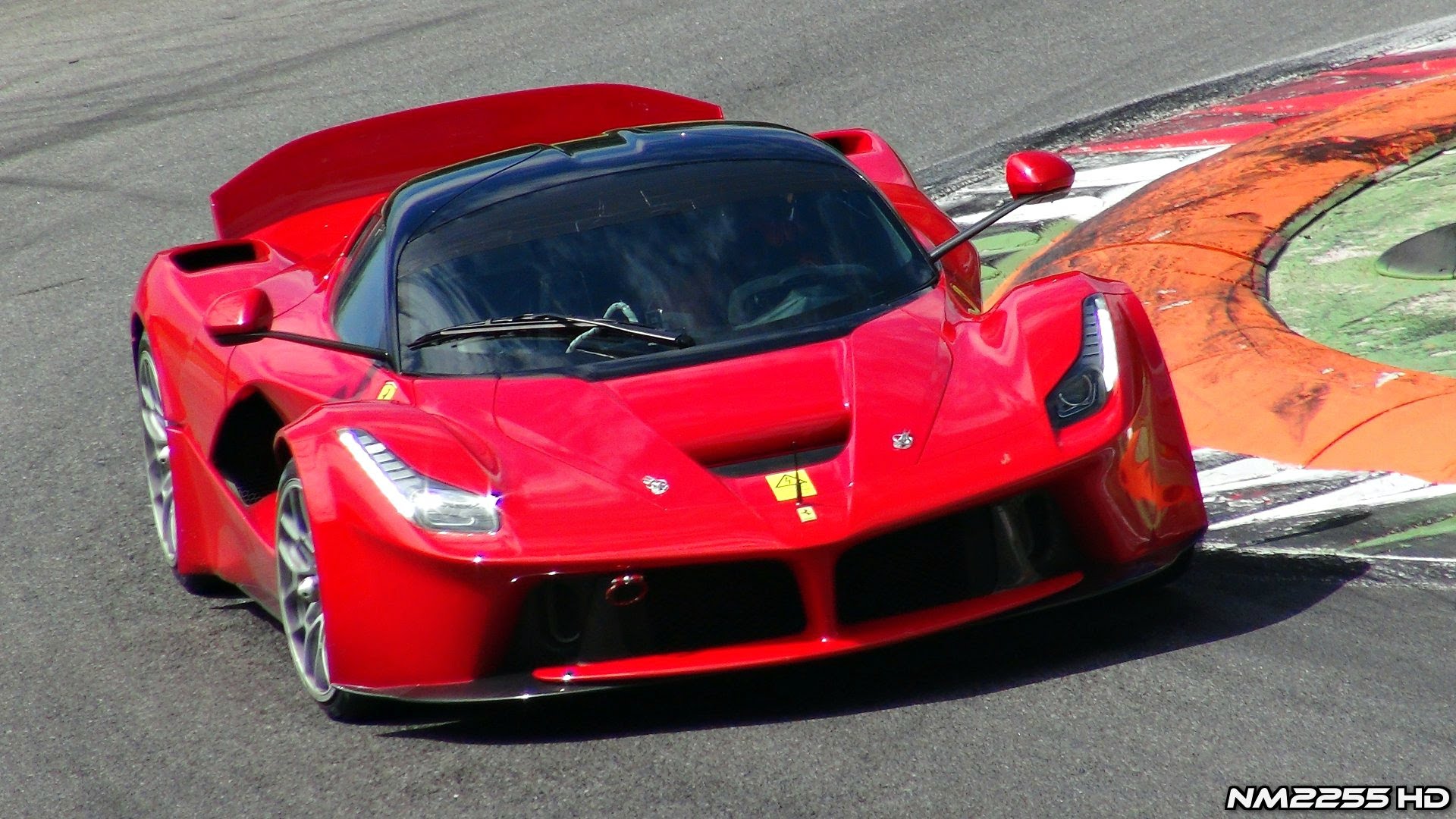
The new Ferrari LaFerrari is an impressive machine, no doubt. But what is more impressive is that Ferrari is already improving on it by testing the new barely-street legal: XX. How do you make the sharpest knife in the world even sharper? Well, you take it to Monza and you drive the piss out of it and improve on it, as demonstrated in the video below. This prototype gets beat on a little too hard and snaps something in the right rear suspension. Hey, sacrifices need to be made if you want to remain the flagship supercar of the world.